The harder it is, the easier it gets!

Part 1
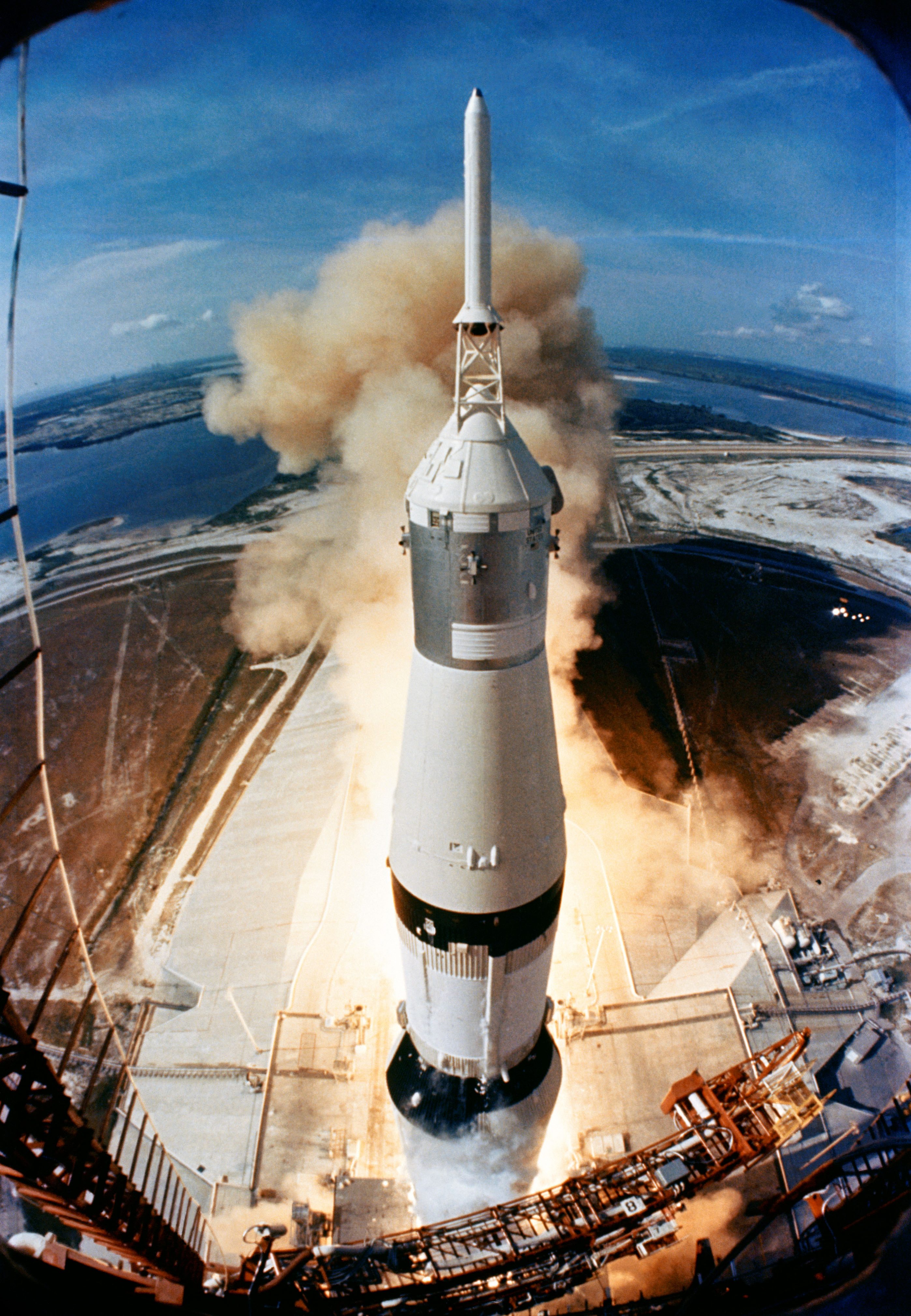
“We choose to go to the moon in this decade and do the other things, not because they are easy, but because they are hard”
So goes the famous JFK speech which helped galvanize the US space program that culminated with human beings walking on the moon. It is unfathomable to comprehend how such monumental tasks were even attempted given the technological development of the time. It was a tremendous challenge, and it was met head on by a determined group of people who never once faltered under the slightest lapse of doubt. Humanity likes to think of ourselves as magnificent creatures whose proudest gift it is to reach the greatest of heights when the harshest of odds are stacked against us. And, self serving as it sounds, we do tend to deliver when the going gets tough. So it follows that THE OBSTACLE is of paramount importance to every story, for it is what a character must overcome to get what he wants/needs.
Yes, it is.
The obstacle qualifies the character, resolve and quality of our hero. Some say the most important component in a story is the villain, for it is an opponent that defines the hero. I would say that the obstacle is far more important. Said obstacle can be the villain himself, or the traps the villain lays along the way for the hero, or something the hero must overcome before he can face the villain. Even when the villain is the obstacle, there is something this nemesis is trying to prevent our protagonist from achieving, so the villain is an instrument, a manifestation of the obstacle. In other stories there is no villain at all. But there is always an obstacle. Or several. Their dramatic purpose is one and the same. The obstacle also helps us develop our character. Must our hero learn new skills, form new alliances, overcome old habits, become a better self, before he can overcome the obstacle? Multifaceted, complex characters don’t exist in a vacuum, they simply go through different phases as the obstacle forces them to. Therefore, the more difficult the obstacle the better the story, right? Well, yes, but no, not really. The stakes have to be commensurate with the goals of the character and fit within the frame of the story. We don’t want a fight to the death over parking at Whole Foods (though I’m sure it has happened) anymore than we want potentially troublesome situations to resolve themselves before they truly impact our heroes (Yes, I’m looking at you Downton Abbey) It is a big balancing act. Therein lies the catch to creating truly meaningful obstacles for our characters in a way that makes their journey more resonant.
So, how do we tackle this?

“Everything I write has a precedent in truth”
Ian Fleming
Bewildering stuff coming from the creator of James Bond, but in fairness, the heroics of 007 are far more digestible in the books than they are in the films. A man with all the skills of the British super agent could, potentially, bring about all of his acumen to bear at the right time, time after time. Here’s the one thing that matters most when creating your obstacle: Believability. And no, I don’t mean whether the hero possesses the necessary skills to make easy work of the task. More important is that our readers believe our character would well and truly attempt to overcome such an obstacle, especially if it is a risky proposition. The scarier the monster, the higher the mountain, the fiercer the opponent, the more at a disadvantage our hero is, the more we must convince our audience, without a shred of a doubt, that there is no way but forward. Without such belief, there can’t be suspension of disbelief. Be it a documentary, reality based fiction, or the most outlandish sci-fi, if we feel the character’s plight is honest, we are on board to the very end. Our obstacle has to be grounded in a foundation of credibility. An expert mountaineer can climb Mount Everest, but so can a regular person provided the stakes are high enough, given that they share the same anatomy of legs and lungs. The main premise of Lord of the Rings is that Frodo must carry the One Ring across the land to Mordor. A small Hobbit and all, he is nevertheless physically able to do so, and though many fantastical things happen elsewhere in the story (glowing eyes, flying beasts, ghost riders, armies of the undead, wizard spells) Frodo’s quest remains anchored in reality. He arrives to the end of his journey one step at a time, never once having been aided by supernatural forces. In other cases, the obstacle itself may be insurmountable – as many a character has perished in their quest – but we can make that work so long as the character (and thus the audience), believes that he has no choice but to face that obstacle. Consequently, the character must also believe that he stands an acceptable chance of success, for even suicide missions have the aim of slowing down the enemy or decimating its forces. Embarking on a fool’s errand may be acceptable if the outcome is unimportant, but when the stakes are truly consequential, you’ll have a hard time gaining your readers’ sympathy if you send your characters out to certain failure without any prospects. Readers truly want to believe, but you have to make it logical for them to do so.
“Game over man, we’re all gonna die!”
Private Hudson – Aliens. Script by James Cameron
Ah yes, the old our-lives-are-in-danger ploy…
…Then again, a living creature can risk nothing of more value than its own existence.
Hudson was right. Only three of the sixteen persons that first landed on LV-426 survived after those naughty Xenomorphs had their fun at the end of this great Sci-Fi film. As more Homo Sapiens continue to spew their entrails at the hands claws of Aliens, Hudson’s cowardice turns into a steely resolve to face his inevitable demise with unmatched ferocity. And fight he does, taking quite a few of the slimy, scaly bastards with him in a frenzied flash of martial glory. This final show of bravado absolves him of his previous excess of gelatinous backbone, and we are left with a positive opinion of the character. As Horatius put it: “How can a man die better than facing fearful odds”. Indeed.
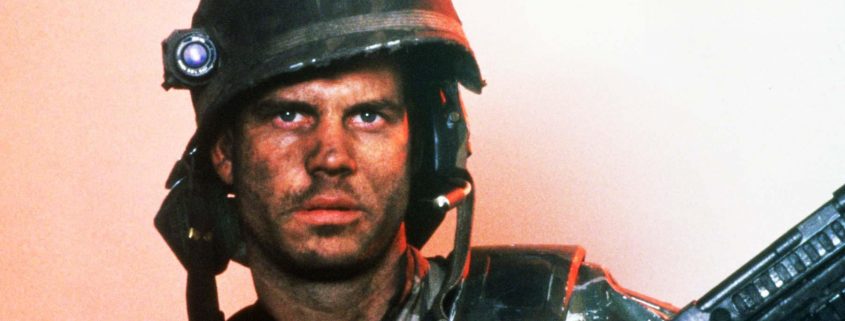
Hudson’s stark transformation reveals one of the most important lessons for writers weighing in the seriousness/repercussions of their obstacles. Make it hard and some will flake out, make it harder and even more will quit, but make it life-or-death and most will fight. It is no longer a question of exulted bravery or lofty ideals, but of simple survival, the strongest of all instincts. And readers will readily identify with this premise. But then, there is death, and there is death. When 300 Spartans march on their own volition to meet certain beheading at the blades of Persian scimitars, admirable though their act is, it remains an unidentifiable concept for the many of us who would never do such a thing. Many romantic heroes feel thus removed from reality, their gallant willingness to sacrifice for ideals not quite hitting home. That is why the story of William Wallace (Braveheart) touches us far more deeply than that of Robin Hood, Zorro, the Three Musketeers, the Last of the Mohicans, etc, etc. The difference does not lie simply in the fact that Wallace is a historical figure while the others are literary creations. The aforementioned Spartans and their famous king Leonidas were as real as Wallace. It has more to do with Wallace enduring unimaginable suffering until enough is taken from him (parents, land, freedom, and finally his wife) that fighting to the bitter end is the only option left. The same goes for our fictional grunt Hudson, his scrotum only swells as his options deflate. Quite different to casually venturing out on a quest for adventure in the name of social justice. The ultimate outcome may be death in both cases, but it is how the characters arrive at the point of deciding to march towards that death that can make the story either register emotionally or fall flat.
“Misery loves company”
My Grandmother
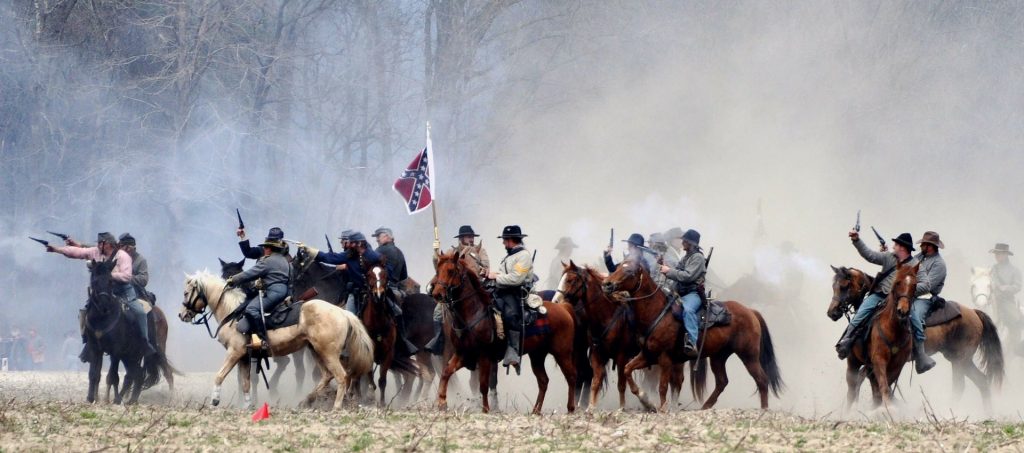
Never is a tough fight, regardless of the outcome being horrible annihilation or sublime victory, more meaningful than when it is shared by a group. As social creatures, shared destinies carry a special significance for humans. Having others join your hero as he/she marches towards that defining confrontation definitely ups the stakes. It multiplies them so to speak. The greatest victories of all time have been achieved in scale, entire armies, countries, even continents, prevailing in the face of evil. History is likewise full of accounts of collective immolation, from small tribes not yielding to overpowering invaders thousands of years ago, to entire cities dying of starvation rather than opening their gates to the enemy as recently as World War 2. Collectively arriving at that decision makes more sense, and carries more gravitas, than the hero going it alone. Especially if said hero flies solo because of how skilled, awesome, and self assured he is. Individual superiority pales in comparison to group resolve in the scale of genuine motivation. Unless of course, you are writing a superhero story. And even then, Neo needed Morpheus and Trinity’s help in The Matrix. Without them, Neo could neither grow to his full potential, nor face his ultimate destiny. By comparison, when characters like Superman, Spiderman, Thor, or The Hulk, contemplate “certain death” we always know the result will be anything but. We are not invested in their plight, for there is no plight. Even deeply personal stories can still frame their characters’ arch within a collective struggle. The doomed love stories of Rose and Jack (Titanic), or Ada and Inman (Cold Mountain), are all the more heartfelt because they play against the much larger tragic backgrounds of the sinking of Titanic and the Civil War respectively. Jack and Rose’s obstacle is one and the same, to escape from the trappings of societal class differences and be free to love and live a fulfilling life. Titanic’s sinking is just one final obstacle, harsher in consequence but non detrimental to their quest, for they have already decided to start anew together. Likewise, Ada and Inman’s trip is one of self improvement, hers to become a self sufficient farmer or die of starvation, and his to outgrow his conflicted nature. The Civil War is not an obstacle but a dramatic situation that simply forces them to achieve their needs before they can be together. Inman’s trip back to Ada would not have made him the man he needed to be had he not encountered so many people and helped them survive the horrors of the war. In both stories, their love feels heightened by the bigger tragedy rather than lessened. They are a reminder that there is a personal story in each and every one of those victims. We identity with our heroes as a part of a larger group trying to survive so they can carry on with their dreams.
Exercise:
Find some of your favorite stories and see if the obstacle complies with the three premises above: 1) Credible, 2) High stakes that rely more on instinct than heroism, and, 3) A group background for our hero. If you find some that do not fulfill all three criteria, how would you add the missing elements? Write a short summary and share in the comments.